

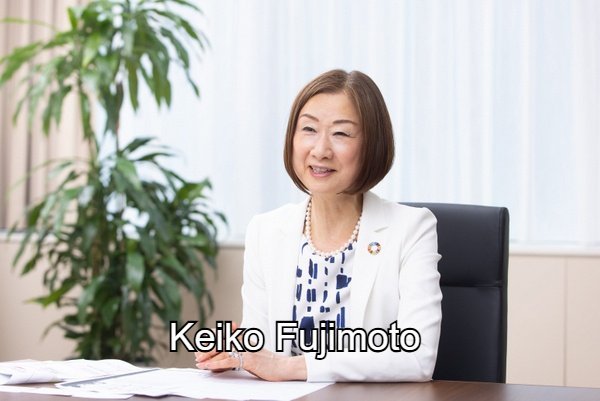
Keiko Fujimoto is a name that appears across various online searches, discussions, and name databases, often sparking curiosity about who she is and what her background might be. In many cases, when a name gains attention like this, it doesn’t always point to a single widely documented public figure. Instead, it can reflect multiple individuals, cultural interest, or even confusion across similar names.
What makes this particular name interesting is how it circulates in search engines and casual online discussions without a consistently verified or widely centralized biography attached to it. That alone often leads people to look deeper, trying to connect the dots between scattered references.
In today’s digital world, even a relatively common Japanese name like Keiko Fujimoto can generate global curiosity. This happens especially when the name appears in social media mentions, sports-related discussions, entertainment contexts, or genealogy searches.
So rather than treating it as a single clearly defined celebrity profile, it’s more accurate and useful to explore the name itself, its cultural background, and why it attracts attention in the first place.
The Origin and Meaning of the Name Keiko Fujimoto
The name Keiko is a traditional Japanese female given name, and it carries several possible meanings depending on the kanji characters used to write it. Common interpretations include meanings like “blessed child,” “respectful child,” or “happy child.” This flexibility in meaning is a unique feature of Japanese naming culture, where the same pronunciation can have different written forms and meanings.
Fujimoto, on the other hand, is a well-established Japanese surname. It is typically written with characters that can translate loosely to “wisteria origin” or “base of wisteria.” The surname is relatively common in Japan and is associated with many families across different regions of the country.
When combined, “Keiko Fujimoto” forms a name that sounds traditional, elegant, and culturally rooted. It is not unusual in Japan, which means that multiple individuals may share the same name without necessarily being related or publicly known.
This is an important point because Western audiences sometimes assume that a unique-sounding name refers to a single individual. In reality, Japanese naming conventions and population size make name duplication quite common, which can lead to multiple unrelated people sharing the same full name.
Public Interest and Online Searches

One of the main reasons the name Keiko Fujimoto appears frequently in online searches is curiosity. People often encounter the name in passing—maybe in an article comment, a social media post, or a mention connected to another public figure—and then search for more information.
However, what they often find is limited or fragmented. This creates a cycle where curiosity increases because information is not centralized or clearly documented. In the digital age, even small mentions can snowball into search trends, especially when paired with related high-profile names or topics.
Another reason for interest is the way search engines function. They connect similar keywords, suggesting related queries even when the original reference is minor. So once a name like Keiko Fujimoto begins appearing in search activity, it can continue circulating through recommendation algorithms.
It’s also worth noting that not every name associated with public curiosity belongs to a celebrity or media personality. Sometimes, names become semi-visible online simply due to association, misunderstanding, or incomplete context in digital content.
Possible Associations and Common Confusions
When a name like Keiko Fujimoto gains attention online, it is not uncommon for it to be mistakenly associated with other public figures. This is especially true when dealing with international names that may be unfamiliar to global audiences.
In some cases, people may assume a connection to celebrities, athletes, or entertainment personalities with similar-sounding Japanese names. However, without verified biographical sources or consistent public records, such assumptions can easily become misleading.
This is why it’s important to approach such names carefully and avoid jumping to conclusions. The internet often blends partial information, and search engines may group unrelated references together simply because they share similar keywords.
Another common issue is translation and romanization differences. Japanese names can be written in multiple ways when converted into English letters, which sometimes creates duplicate or confusing entries for the same or different individuals.
Because of these factors, “Keiko Fujimoto” may appear in different contexts that are not necessarily connected. This makes it more of a “search interest name” rather than a clearly defined public biography in most cases.
Cultural Context of Japanese Names
Understanding Japanese naming culture helps explain why names like Keiko Fujimoto appear frequently and why they can belong to multiple individuals without confusion inside Japan itself.
In Japan, names carry deep cultural meaning, and parents often choose kanji characters based on their desired symbolism, sound, and aesthetic balance. As a result, even common names can have rich variations in meaning depending on how they are written.
Surnames like Fujimoto are shared by many unrelated families. Japan has a large but relatively concentrated set of surnames, meaning duplication is normal and culturally accepted. Unlike some Western naming systems where uniqueness is more expected, Japanese naming traditions do not prioritize exclusivity.
Given this context, it becomes clear why a name like Keiko Fujimoto should not automatically be assumed to represent a single globally recognized individual. Instead, it may represent multiple people across different professions, regions, or even private life contexts.
This cultural understanding is important for avoiding misinterpretation, especially in online environments where information is often incomplete or decontextualized.
Why Some Personalities Have Limited Public Information
Not every person who becomes the subject of online searches has a public career or media presence. In fact, many names gain attention simply because they are mentioned in passing or connected indirectly to someone more prominent.
Privacy also plays a significant role. In Japanese culture, and in many other societies, individuals who are not professional public figures often maintain a low online profile. This means there may be little to no verified biographical information available publicly.
Another factor is media coverage. Only individuals involved in entertainment, sports, politics, or similar fields typically have detailed public records. Without media exposure, a person’s name may exist online only in limited references, which can be easily misinterpreted.
This creates an interesting digital phenomenon: a name becomes widely searched, but reliable information remains scarce. In such cases, the curiosity is driven more by search behavior than by confirmed public identity.
Keiko Fujimoto appears to fall into this category in many online contexts, where the name is recognized but not strongly tied to a single documented public biography.
Conclusion
Keiko Fujimoto is a name that reflects the intersection of cultural naming traditions, online search behavior, and modern digital curiosity. While it may appear frequently in searches, it does not necessarily correspond to a single widely documented public figure.
Instead, the name represents a broader reality of how information spreads online—where names can gain attention without a centralized or verified biography. Understanding the cultural background of Japanese names also helps clarify why duplication and ambiguity are completely normal.