

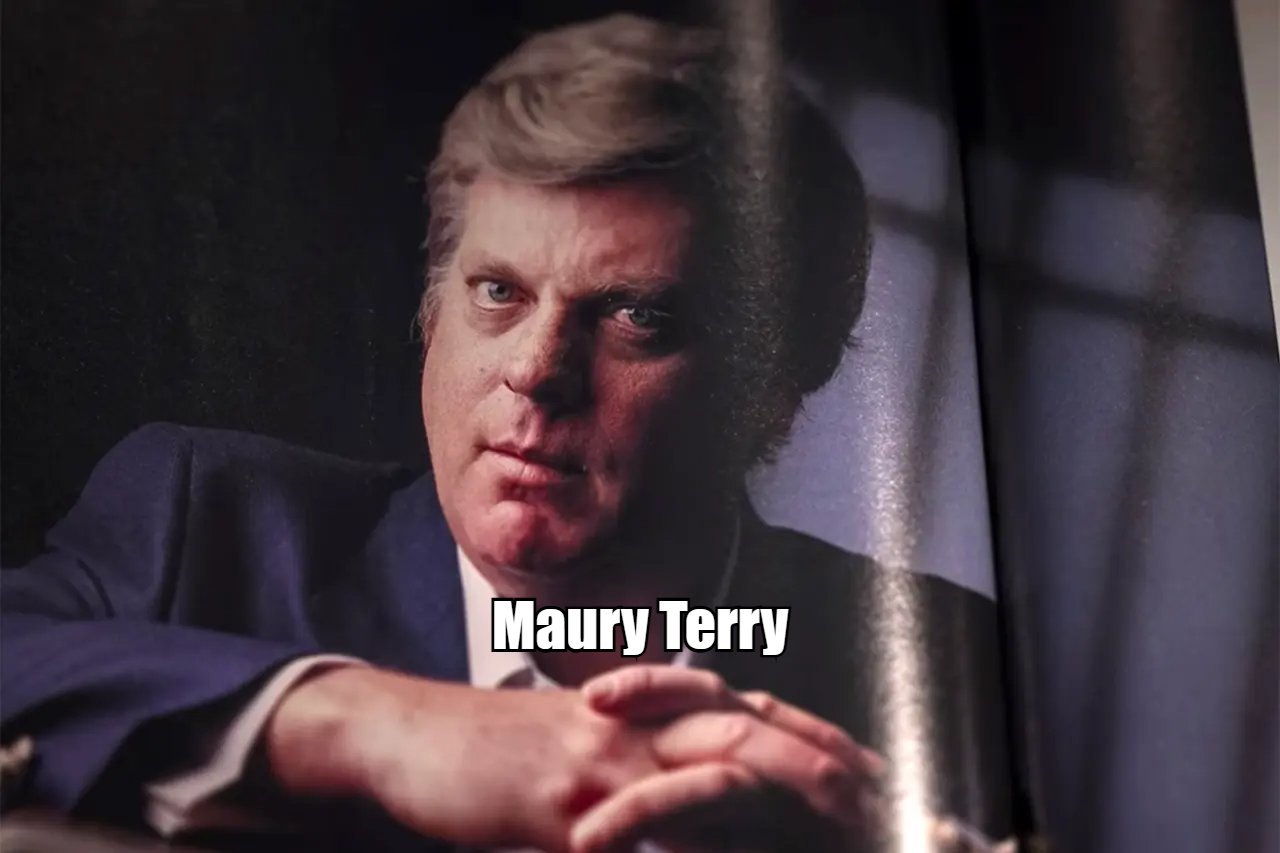
Who Maury Terry Was and Why He Still Matters
Maury Terry was an American journalist best known for his relentless investigation into the infamous Son of Sam killings in New York City during the late 1970s. While most of the world accepted the official story that a single gunman, David Berkowitz, acted alone, Terry spent decades arguing that the truth was far more complex.
His work wasn’t just casual reporting. It became an obsession that shaped his entire career. He dug through police files, interviewed witnesses, tracked obscure leads, and connected dots that many others ignored or dismissed entirely. Over time, he built a controversial theory suggesting that the case involved more than one shooter and possibly a broader cult-like network operating in the shadows of the city.
What makes Maury Terry’s story so compelling is not just the case itself, but the way he approached it. He challenged official narratives at a time when doing so was far more difficult than it is today. His work continues to spark debate about investigative journalism, conspiracy theories, and the limits of criminal justice certainty.
Early Life and Journalism Career
Maury Terry grew up in New York, where he developed an early interest in storytelling, writing, and investigative work. Like many journalists of his era, he started with traditional reporting roles, focusing on crime and local news. This foundation helped him build the skills that would later define his career: attention to detail, persistence, and a willingness to follow leads wherever they went.
Before becoming known for the Son of Sam investigation, Terry worked in mainstream journalism. He was not initially focused on conspiracy theories or controversial cases. Instead, he was a working reporter who gradually became fascinated by inconsistencies he noticed in high-profile criminal cases. That curiosity eventually led him down a path that would consume much of his professional life.
As he gained experience, Terry developed a reputation for being meticulous but also unusually persistent. He was not satisfied with surface-level explanations, especially in cases involving violence and public fear. This mindset would later become central to his work on the Son of Sam murders, where he believed the official story left too many unanswered questions.
The Son of Sam Case and Maury Terry Obsession

The Son of Sam killings, officially classified as a series of shootings in New York City during 1976–1977, became one of the most feared crime sprees in American history. The case was officially attributed to David Berkowitz, who eventually confessed to the crimes. The public largely accepted the case as solved.
However, Maury Terry was not convinced.
He began investigating after noticing inconsistencies in the case files, media reports, and witness testimonies. What started as curiosity quickly became a full-scale investigation. He spent years interviewing witnesses, reviewing police records, and mapping connections that he believed pointed beyond a single perpetrator.
Terry’s central argument was that Berkowitz may not have acted alone. He suggested that a larger network or group could have been involved, potentially influencing or directing the shootings. This theory was highly controversial and rejected by law enforcement officials, but it became the foundation of Terry’s life’s work.
Despite widespread skepticism, he continued to gather material, eventually producing extensive documentation that would later form the basis of his book The Ultimate Evil. His work attracted both supporters and critics, but it undeniably reshaped public discussion about the case.
Theories, Evidence, and Controversy
One of the most debated aspects of Maury Terry’s work is his theory that the Son of Sam case involved more than just David Berkowitz. He pointed to alleged connections between Berkowitz and other individuals, as well as symbolic patterns in letters and messages attributed to the killer.
Terry believed these connections suggested the presence of a cult-like structure, possibly linked to occult practices. He argued that certain inconsistencies in Berkowitz’s confessions and actions did not align with a lone-wolf scenario. According to him, the evidence pointed toward coordination, influence, or even participation by others.
However, these claims were heavily disputed by law enforcement and many criminologists. Official investigations maintained that Berkowitz acted alone and that his confessions were consistent with the physical evidence. Critics of Terry’s work argued that he often relied on circumstantial connections and pattern-based reasoning that could be interpreted in multiple ways.
Despite this, Terry’s work gained attention because it reflected a broader tension in criminal investigations: the gap between official conclusions and public skepticism. Even if his theories were not universally accepted, they forced readers to question how narratives are built in high-profile cases.
The Ultimate Evil and Public Impact
Maury Terry’s book The Ultimate Evil became the most well-known expression of his investigative work. In it, he laid out his theory in detail, presenting evidence, interviews, and analysis that supported his belief in a larger conspiracy behind the Son of Sam killings.
The book did not just summarize a case—it challenged an official conclusion. That made it both influential and controversial. Readers were divided: some saw it as groundbreaking investigative journalism, while others viewed it as speculative and unproven.
What cannot be denied is the cultural impact of the book. It contributed to ongoing public fascination with the Son of Sam case and helped keep debate alive decades after the crimes occurred. It also influenced documentaries, interviews, and later reinterpretations of the case.
Terry’s work showed how a single journalist can reshape public conversation, even when their conclusions are disputed. His persistence ensured that the case remained a subject of analysis long after most cold cases fade from public attention.
Later Years and Documentaries
In his later years, Maury Terry continued to defend his findings and expand on his research. He participated in interviews and documentaries, most notably appearing in projects that revisited the Son of Sam case with fresh perspectives.
One of the most notable productions featuring his work was a documentary that explored both his investigation and the official version of events. It presented viewers with a dual narrative: the accepted law enforcement conclusion and Terry’s alternative theory. This format helped audiences understand the depth of disagreement surrounding the case.
Even as time passed, Terry remained committed to his viewpoint. Maury Terry believed that key questions in the case were never fully resolved and that further investigation was warranted. His persistence became a defining characteristic of his public identity.
Legacy and Influence on Investigative Journalism
The legacy of Maury Terry is complex. On one hand, he is remembered as a dedicated journalist who refused to accept easy answers. On the other hand, his theories remain controversial and widely disputed by official sources.
What he undeniably contributed to journalism was a model of deep-dive investigative persistence. He demonstrated how long-term dedication to a single case can uncover overlooked details and challenge established narratives. His work also highlighted the tension between institutional conclusions and independent investigation.
In modern journalism, especially in the age of digital media and true-crime storytelling, Terry’s approach has influenced how many writers and documentarians explore cold cases. His methods—though debated—encouraged a more questioning attitude toward official narratives.
At the same Maury Terry, his story serves as a cautionary example about the importance of evidence standards and interpretive limits. While curiosity and persistence are essential in journalism, so too is careful validation of claims.
Conclusion: A Figure Between Fact, Theory, and Debate
Maury Terry remains one of the most controversial figures in American true-crime history. His work on the Son of Sam case continues to spark discussion, not only about the crimes themselves but also about how investigations are conducted and interpreted.
Whether one agrees with his conclusions or not, his influence is undeniable. He pushed boundaries, challenged authority, and kept one of America’s most infamous cases alive in public discourse for decades. In doing so, he became more than just a journalist—he became a symbol of relentless inquiry, Maury Terry in the face of widespread skepticism.