

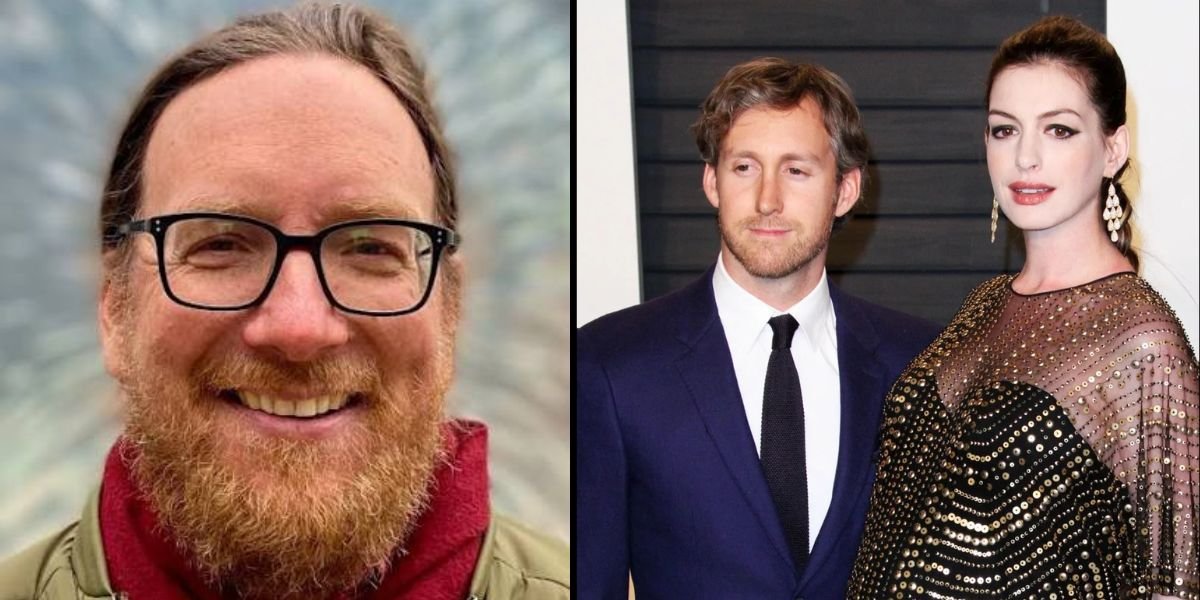
Who Is Michael Hathaway?
Michael Hathaway is a respected scholar, researcher, and professor known for his work in cultural anthropology, environmental studies, Indigenous issues, and the relationship between humans and the natural world. Unlike many public figures whose recognition comes from entertainment or politics, Hathaway has built his reputation through academic research, fieldwork, and thoughtful exploration of complex social and environmental questions. He is particularly recognized for examining how people interact with nature and how different cultures understand the world around them.
As a professor of anthropology at Simon Fraser University, Michael Hathaway has spent years studying how environmental ideas, social movements, and cultural practices influence each other. His research has taken him across different regions, especially China and Japan, where he has explored topics connected to conservation, Indigenous communities, and ecological relationships. His work challenges traditional ideas about nature by showing that human societies and the environment are deeply connected.
What makes Michael Hathaway’s work interesting is his ability to look beyond simple explanations. Instead of treating nature as something separate from human life, he explores how landscapes, plants, animals, communities, and cultures influence one another. His research provides a unique perspective on globalization, environmental change, and the many ways people create meaning in their surroundings.
Early Academic Journey and Development of His Research Interests
Michael Hathaway developed his academic career around understanding culture, society, and environmental relationships. His journey into anthropology was influenced by curiosity about how people create connections with their surroundings and how different societies develop unique ways of understanding the natural world. Anthropology allowed him to combine social research with environmental questions, creating a field of study that connects human experiences with broader ecological systems.
Throughout his career, Hathaway became interested in how globalization affects local communities and traditional ways of life. Many researchers study globalization from economic or political perspectives, but Hathaway approached it by examining how ideas, environmental movements, and cultural identities travel across borders. His work focuses on the interactions between local communities and global forces.
His research style involves detailed fieldwork, observation, and conversations with communities. Instead of only studying societies from a distance, anthropologists like Hathaway spend time understanding how people experience changes in their everyday lives. This approach has allowed him to explore complicated topics such as environmental activism, Indigenous knowledge, and the changing relationship between humans and nature.
Michael Hathaway’s Role as a Professor and Researcher
Michael Hathaway serves as a Professor of Anthropology at Simon Fraser University and is also associated with the university’s School for International Studies. He has also served as the Director of the David Lam Centre for Asian Studies, where his work connects academic research with broader discussions about Asia and global issues.
As an educator, Hathaway has contributed to the development of students interested in anthropology, environmental studies, and international research. Teaching anthropology is not only about sharing information from books; it is about encouraging students to question assumptions and understand the complexity of human experiences. Hathaway’s academic work reflects this approach by encouraging deeper thinking about society and the environment.
His recognition as a Guggenheim Fellow further highlights the importance of his research contributions. The Guggenheim Fellowship is awarded to individuals who have demonstrated exceptional ability and creative achievement in their fields. This recognition reflects the impact of Hathaway’s work within anthropology and related disciplines.
Environmental Winds: Exploring Global Environmental Connections
One of Michael Hathaway’s major research projects resulted in the book Environmental Winds: Making the Global in Southwest China. This work examines environmentalism and conservation efforts in Southwest China while exploring how different groups create ideas about nature, culture, and environmental responsibility.
The book focuses on how environmental movements are not simply imported from one place to another. Instead, Hathaway shows that local communities, scientists, conservationists, and governments all contribute to shaping environmental ideas. Environmentalism becomes something that is created through interactions between different people and perspectives.
A key idea in this research is that nature is not understood the same way everywhere. Different cultures have different relationships with landscapes, animals, and resources. By studying these differences, Hathaway demonstrates that environmental solutions need to consider local histories, traditions, and social realities rather than relying on a single universal approach.
The Fascinating Research Behind “What a Mushroom Lives For”
Another significant contribution from Michael Hathaway is his book What a Mushroom Lives For: Matsutake and the Worlds They Make. This work explores the matsutake mushroom, a highly valued mushroom found in different parts of the world, including regions connected to China and Japan.
At first glance, studying a mushroom may seem like an unusual academic topic. However, Hathaway uses the matsutake mushroom to explore much larger questions about relationships between humans and non-human life. His research asks readers to think differently about how living organisms shape the worlds around them.
The book challenges the idea that humans are the only important creators of social and ecological systems. Hathaway explores how mushrooms, forests, landscapes, and human communities interact to create shared environments. This perspective encourages people to consider nature as an active participant rather than simply a resource for human use.
The research behind this book represents a broader movement in anthropology that studies relationships between humans and other species. It shows how even a small organism like a mushroom can reveal important lessons about economics, culture, ecology, and human survival.
Michael Hathaway’s Perspective on Nature and Human Relationships
A central theme throughout Michael Hathaway’s work is the connection between humans and the environment. Many modern societies often separate human life from nature, viewing the environment as something outside of daily human experiences. Hathaway’s research questions this separation and explores how deeply connected people are with ecological systems.
His work suggests that understanding nature requires looking at cultural practices, histories, and relationships. A forest, for example, is not only a collection of trees. For different communities, it may represent a source of livelihood, cultural identity, spiritual meaning, or ecological responsibility.
This perspective is especially important today as the world faces environmental challenges such as climate change, biodiversity loss, and resource competition. Hathaway’s research encourages broader thinking about environmental issues by showing that solutions must involve cultural understanding as well as scientific knowledge.
Contributions to Anthropology and Environmental Studies
Michael Hathaway’s contributions extend beyond individual books and research projects. His work has helped expand conversations within anthropology about globalization, ecology, and relationships between different forms of life. He has encouraged researchers and students to consider new ways of understanding the connection between society and nature.
Traditional anthropology often focused mainly on human communities and cultural practices. Hathaway’s research contributes to newer approaches that examine how humans exist within larger ecological networks. This shift has opened opportunities for studying relationships between people, plants, animals, landscapes, and other living systems.
His research also demonstrates the importance of interdisciplinary thinking. Environmental problems cannot be fully understood through science alone or social studies alone. They require cooperation between different fields, including anthropology, ecology, history, and political studies.
The Importance of Michael Hathaway’s Research in Today’s World
The topics explored by Michael Hathaway have become increasingly relevant in the modern world. Environmental challenges are growing, and societies are searching for better ways to balance human needs with ecological protection. His research provides valuable insights into how different communities understand and respond to environmental change.
One important lesson from Hathaway’s work is that there is no single solution to global environmental problems. Different communities have different experiences, knowledge systems, and relationships with nature. Recognizing these differences can lead to more effective and respectful approaches.
His research also reminds people that nature is not separate from society. Human decisions influence ecosystems, and ecological changes influence human communities. Understanding this relationship is essential for creating a more sustainable future.
Conclusion: The Lasting Impact of Michael Hathaway’s Work
Michael Hathaway has established himself as an influential figure in anthropology through his unique approach to studying environmental relationships, globalization, and human interactions with the natural world. His research encourages people to rethink common assumptions about nature and society.
Through works such as Environmental Winds and What a Mushroom Lives For, Hathaway has shown that even ordinary elements of the natural world can reveal deeper stories about culture, economics, and human existence. His studies highlight the importance of understanding the connections between all forms of life.
Although his work is rooted in academic research, the ideas explored by Michael Hathaway have significance far beyond universities. In a world facing environmental uncertainty, his perspective offers valuable lessons about cooperation, respect for nature, and the importance of seeing humans as part of a larger ecological system.
Frequently Asked Questions (FAQs)
Who is Michael Hathaway?
Michael Hathaway is a Professor of Anthropology at Simon Fraser University known for his research on environmentalism, Indigenous issues, globalization, and human relationships with nature.
What is Michael Hathaway famous for?
He is known for his books Environmental Winds: Making the Global in Southwest China and What a Mushroom Lives For: Matsutake and the Worlds They Make.
What does Michael Hathaway study?
His research focuses on cultural anthropology, environmental movements, Indigenous knowledge, and the connections between humans and non-human life.
Where does Michael Hathaway work?
Michael Hathaway works at Simon Fraser University, where he is a Professor of Anthropology and has been involved with Asian studies programs.
Why is Michael Hathaway’s research important?
His research helps people understand environmental issues by showing how culture, society, and nature are interconnected.